|
The method we use to build a Wapack tatara differs from that of the Japanese tradition. Our commitment to using native materials requires this. The various types of earthen materials we use shrink and crack excessively during the drying process if too large a structure is built while they are still moist. We make bricks, allow them to dry thoroughly, then mortar them together with a very wet mixture of the same materials with which the bricks are made.
|
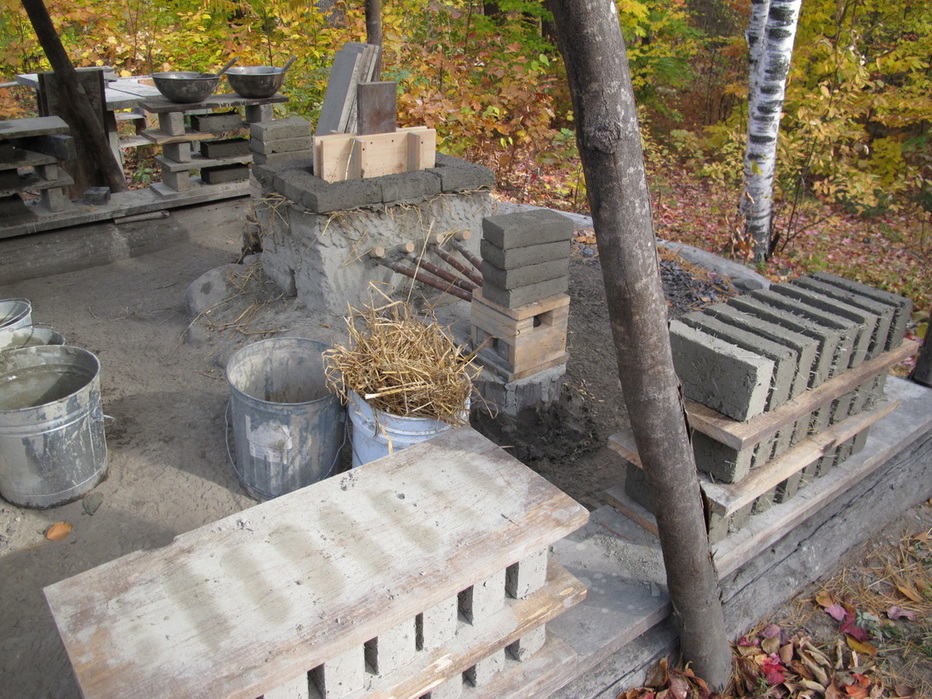
|
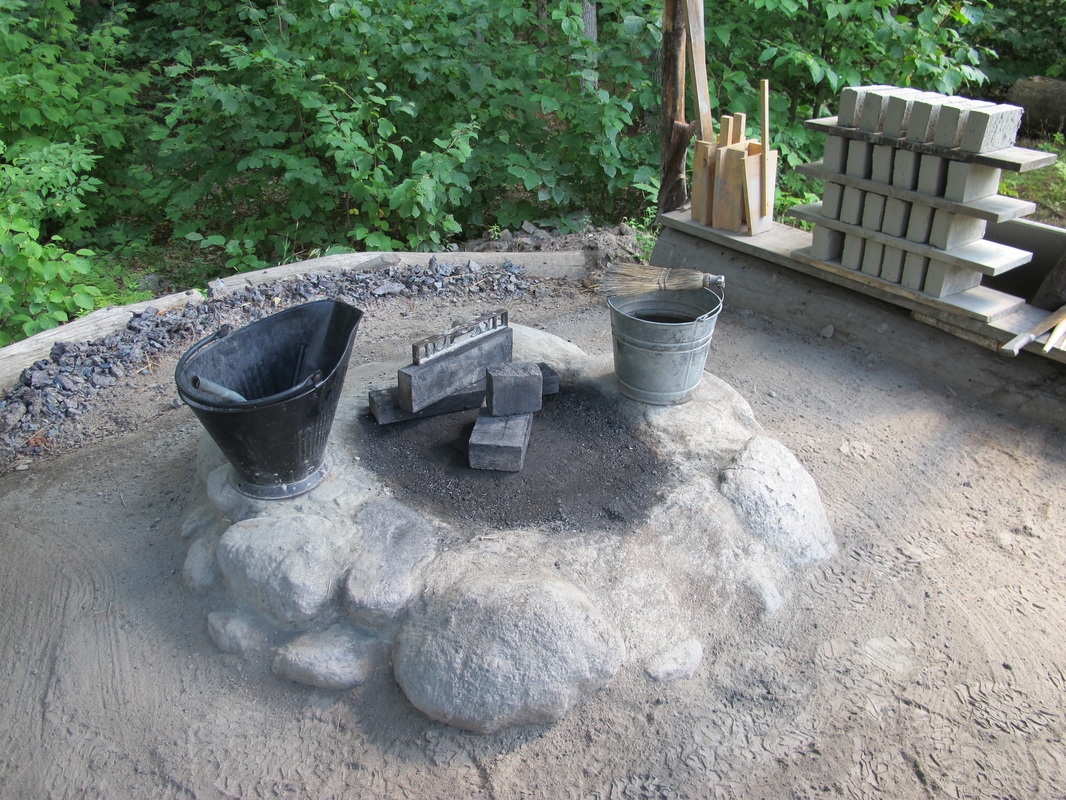
The charcoal bed of the Yuka-Zuri is prepared by repeatedly wetting, crushing, grinding, and pounding the surface.
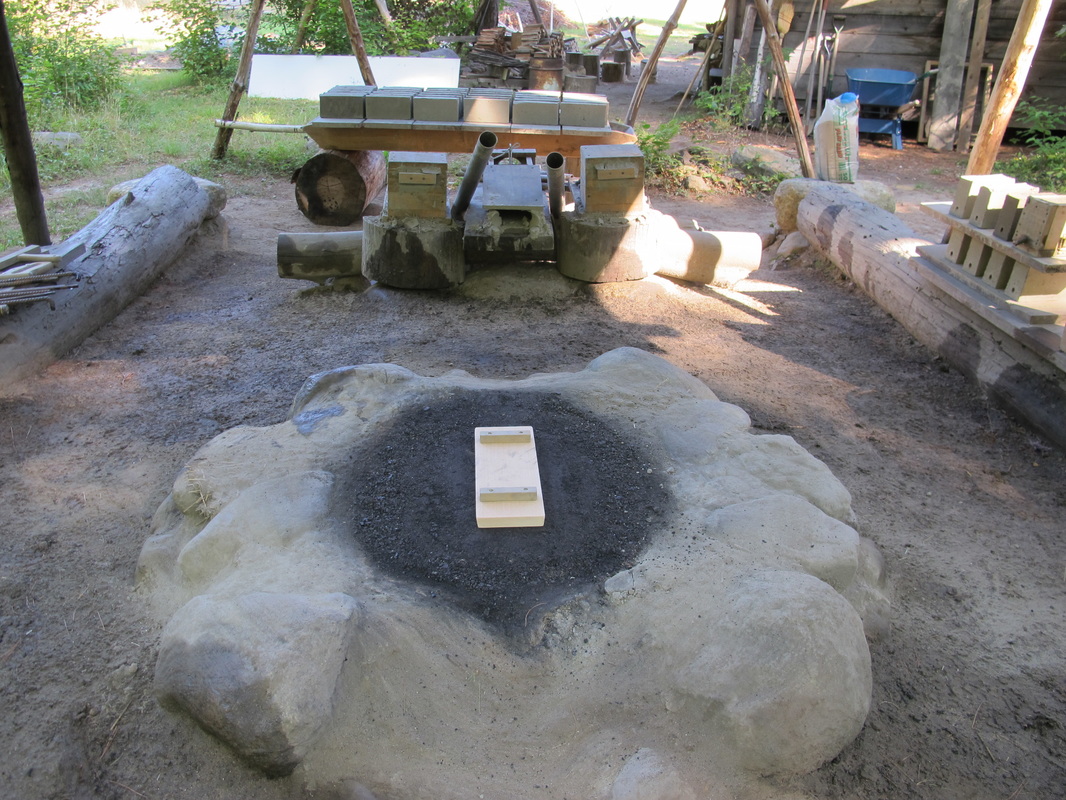
When a hard, smooth, and level surface is achieved a wooden form is placed in the center.
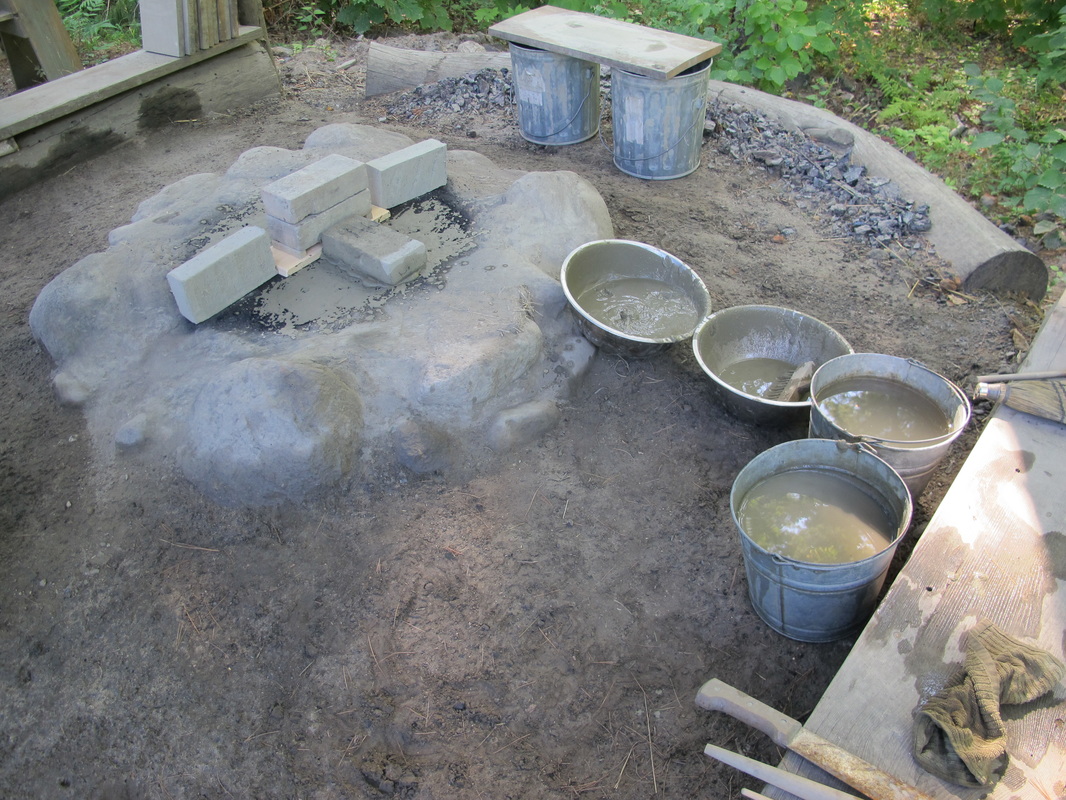
A very wet mixture of cob is splattered onto the charcoal bed and the placing of bricks begins.
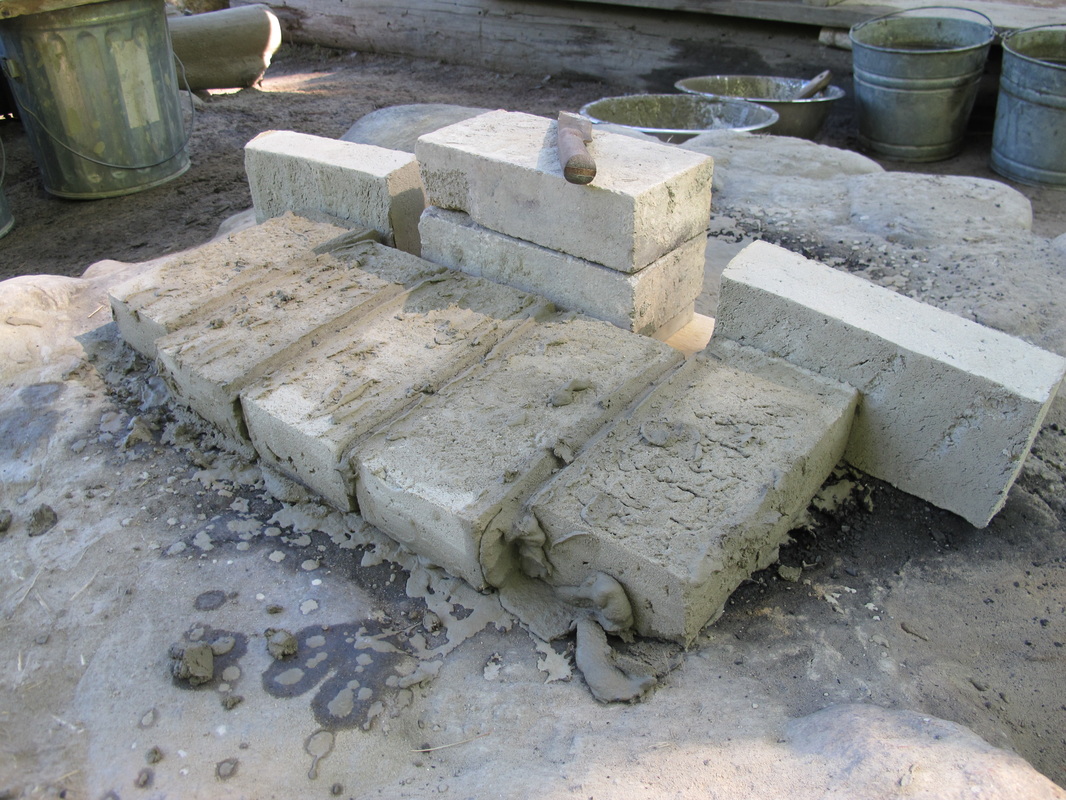
Bricks are moistened with water, very wet cob is brushed onto the adjoining surfaces, cob mortar is applied, and bricks are pressed into position. Mortar oozes from the joints and the excess is scraped away.
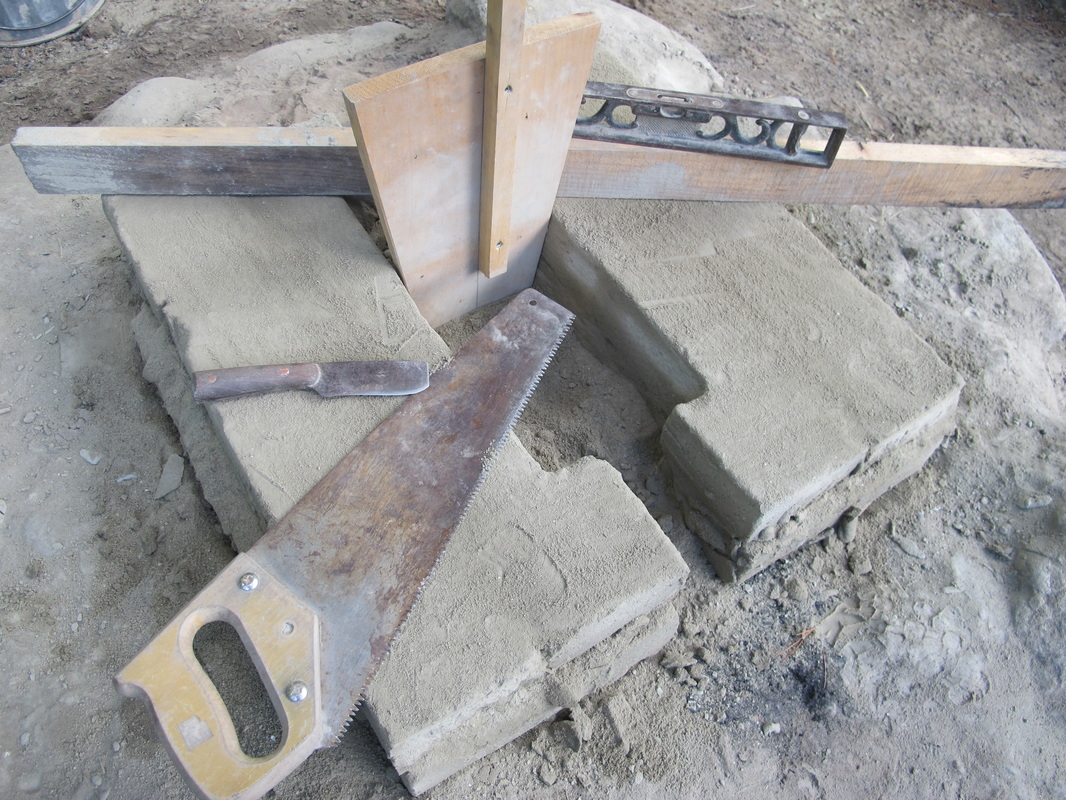
Each course of bricks is leveled and smoothed to create a bonding surface for the next course.
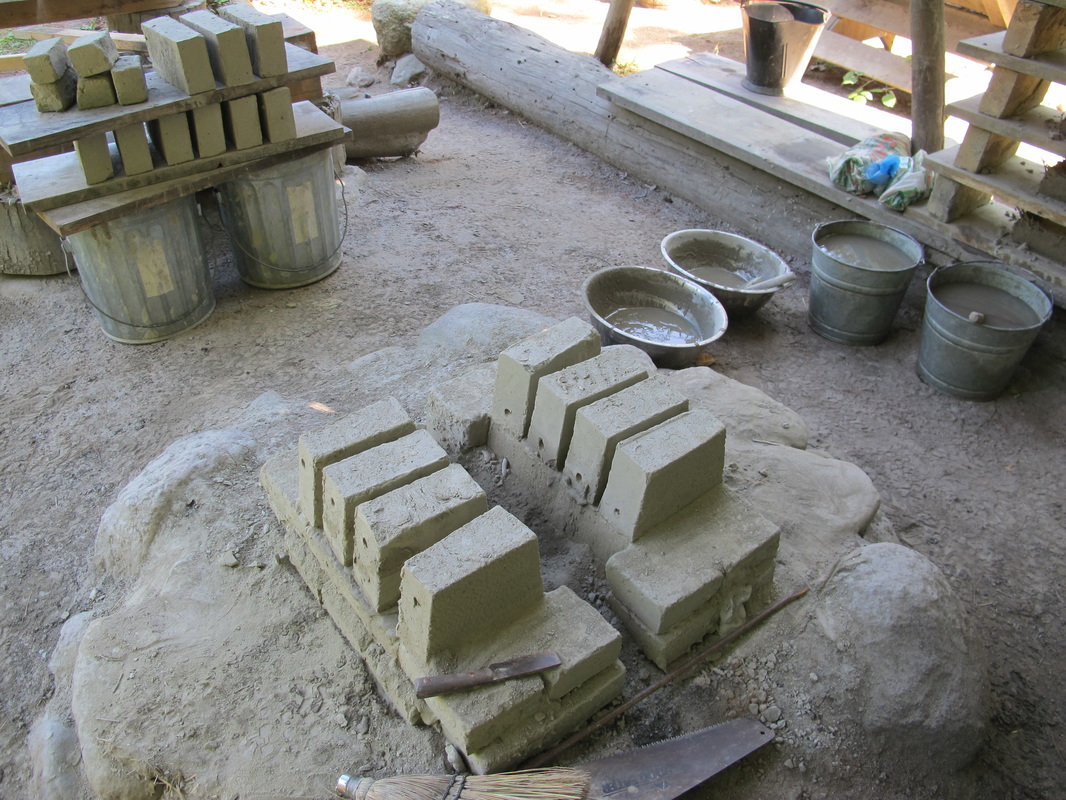
The tuyere blocks are positioned at precise angles.
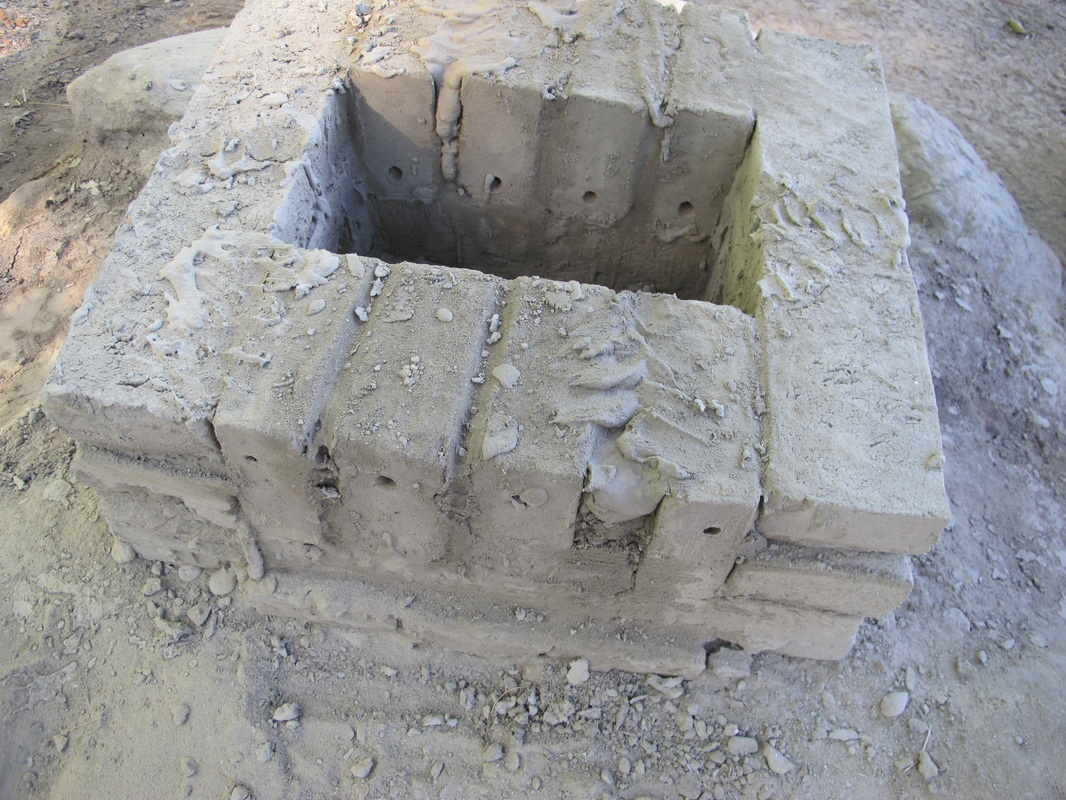
The lower section of the tatara is complete. The materials used for this section are subjected to the most extreme conditions within the furnace and must perform a variety of seemingly paradoxical functions. For while it is necessary to the chemistry of the iron ore reduction that the interior surface gradually melts into a glass-like substance (noro), the air-holes (tuyeres) that penetrate that melting surface need to remain open.
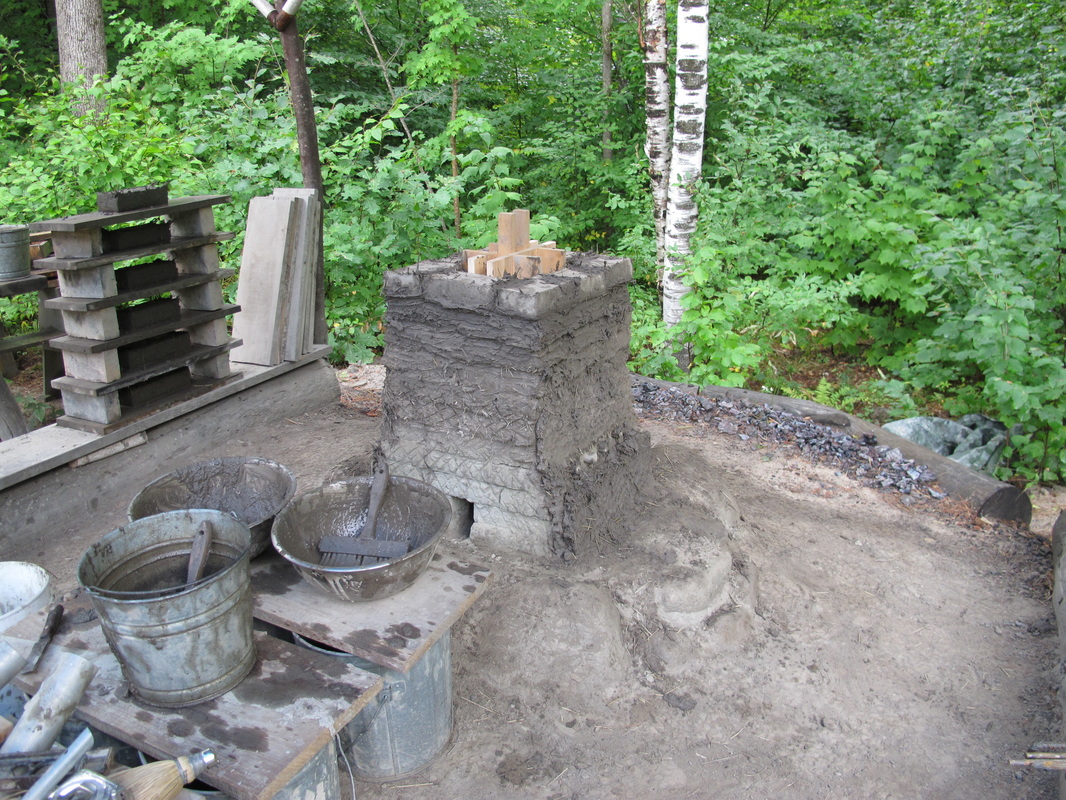
A different type of brick is used for the middle section. In the relatively lower temperatures of this zone, where the rising combustion gasses are heating the descending charge of charcoal and iron ore, conservation of heat is critical. Sifted peat moss is aded to the cob mixture to create an insulating effect. The walls at this level are not melting, and thus the materials are not a factor in the complex chemistry of iron reduction. From here up, the cob mixture includes a 50% portion of recycled material from a previous tatara. The inferior quality of this cob mix affects it's drying properties, so chopped hay is added to hold the bricks together while they dry.
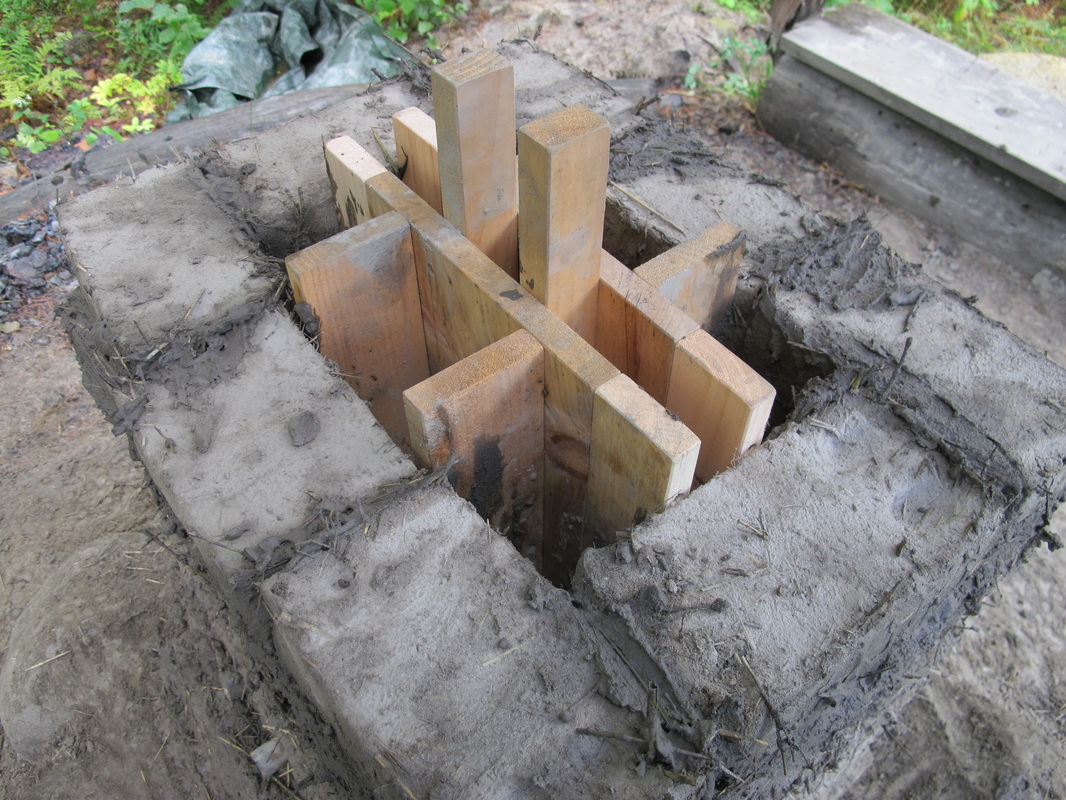
In the middle section, bricks are laid flat around a mold. The mold is kept plumb and is continually moved upwards as succeeding courses of brick are laid. The brick pattern alternates at each course so that mortar joints are staggered.
|
|
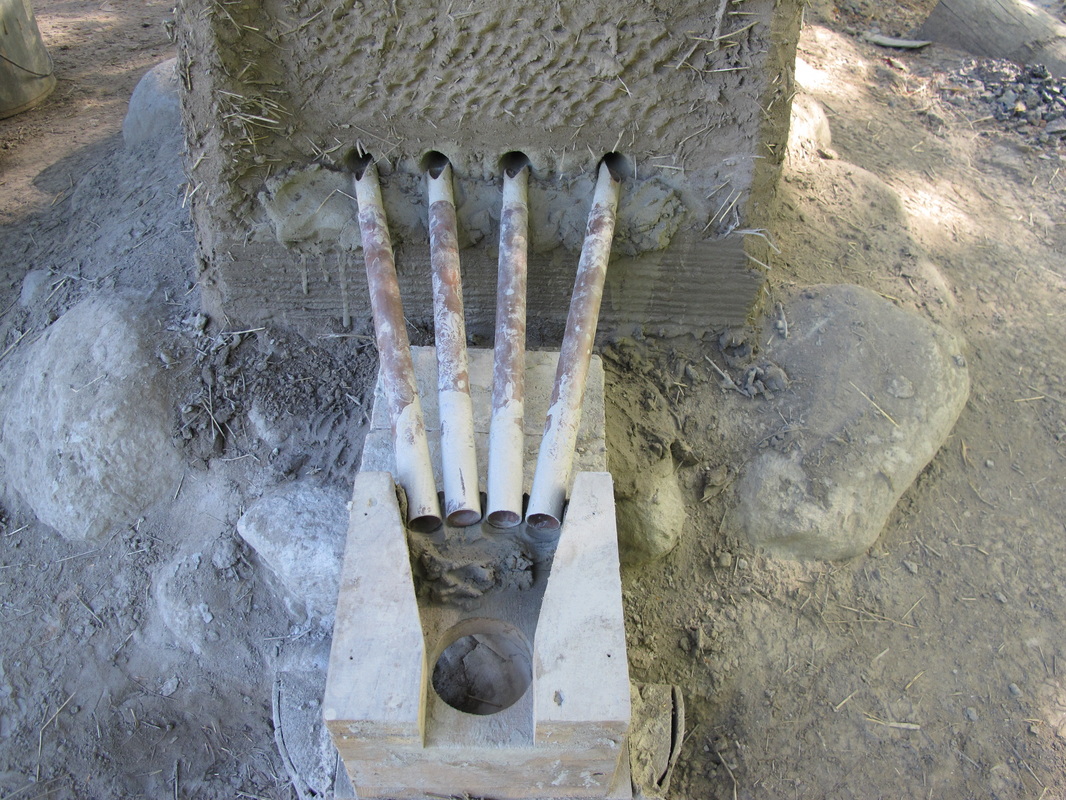
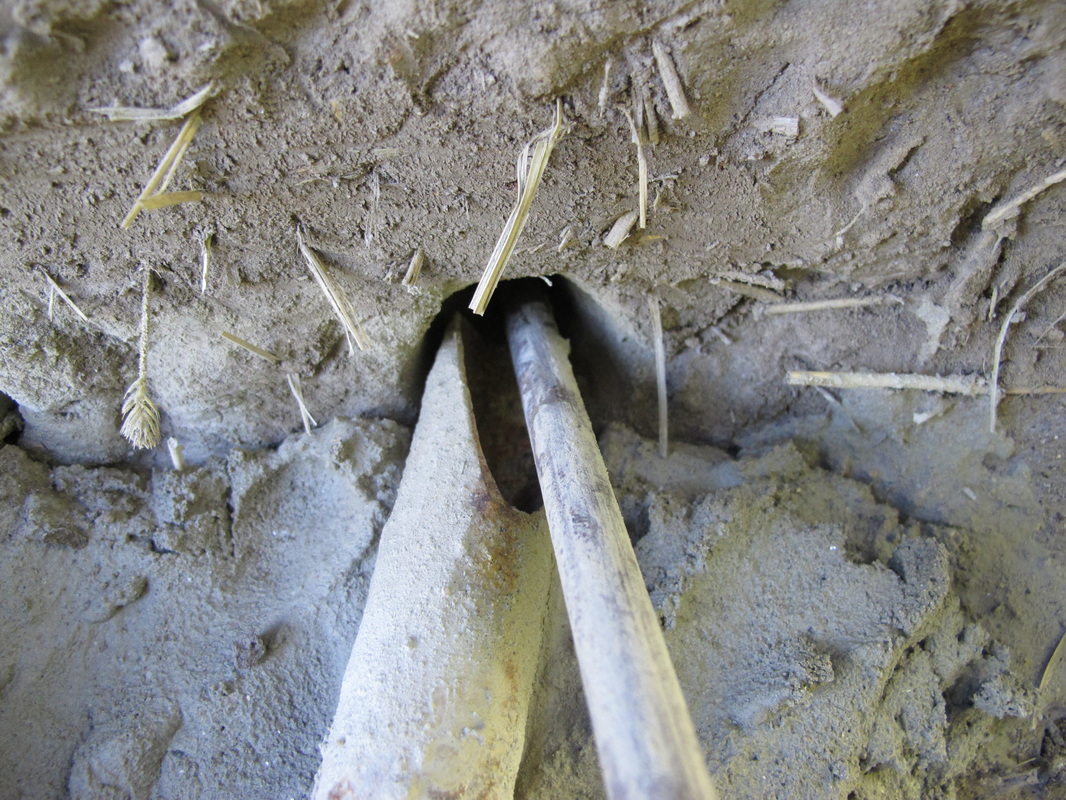
Tuyeres are carved into a shape that will accommodate the windpipes. This is a complicated junction because the air needs to flow from pipe to tuyere at a point where it is also necessary to be able to peek through into the furnace. It is also where clean-out tools need to be inserted for clearing the tuyere orifice when it becomes blocked by slag, thus a precise alignment is critical.
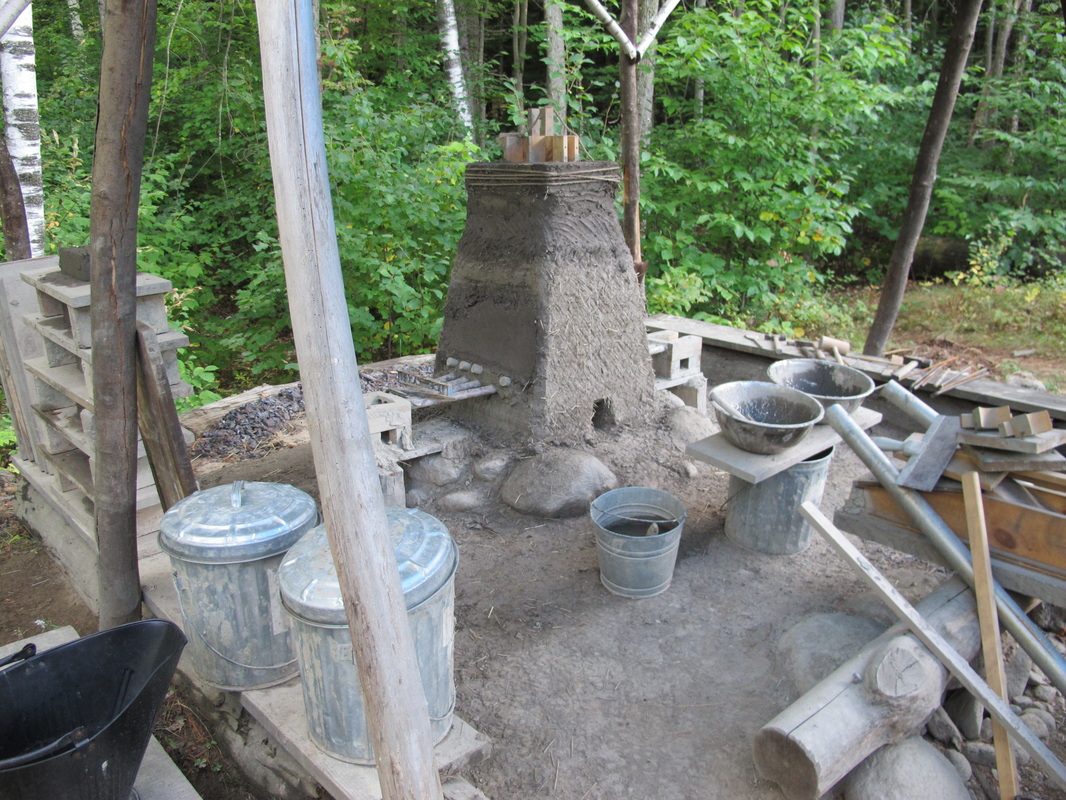
As upward progress continues, an insulating layer of cob is plastered over the lower section of the tatara.
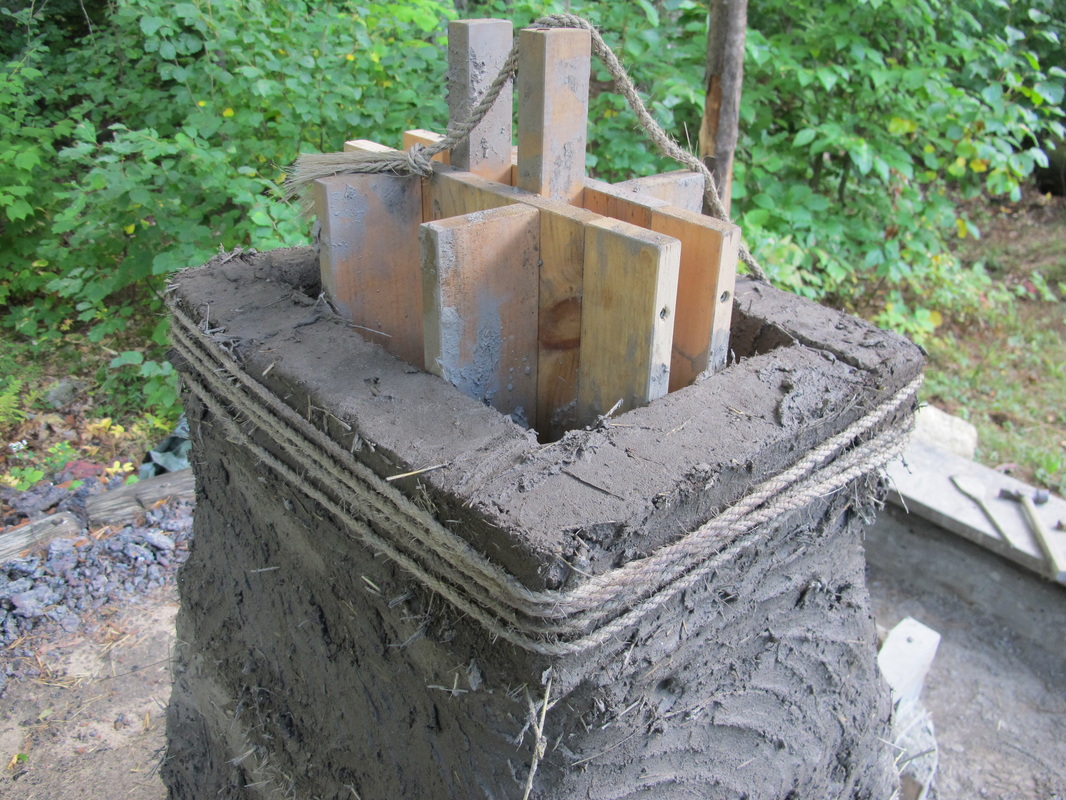
The walls can be thinner in the upper section, so bricks are laid on edge.
Rope holds them together until the mortar sets.
Rope holds them together until the mortar sets.
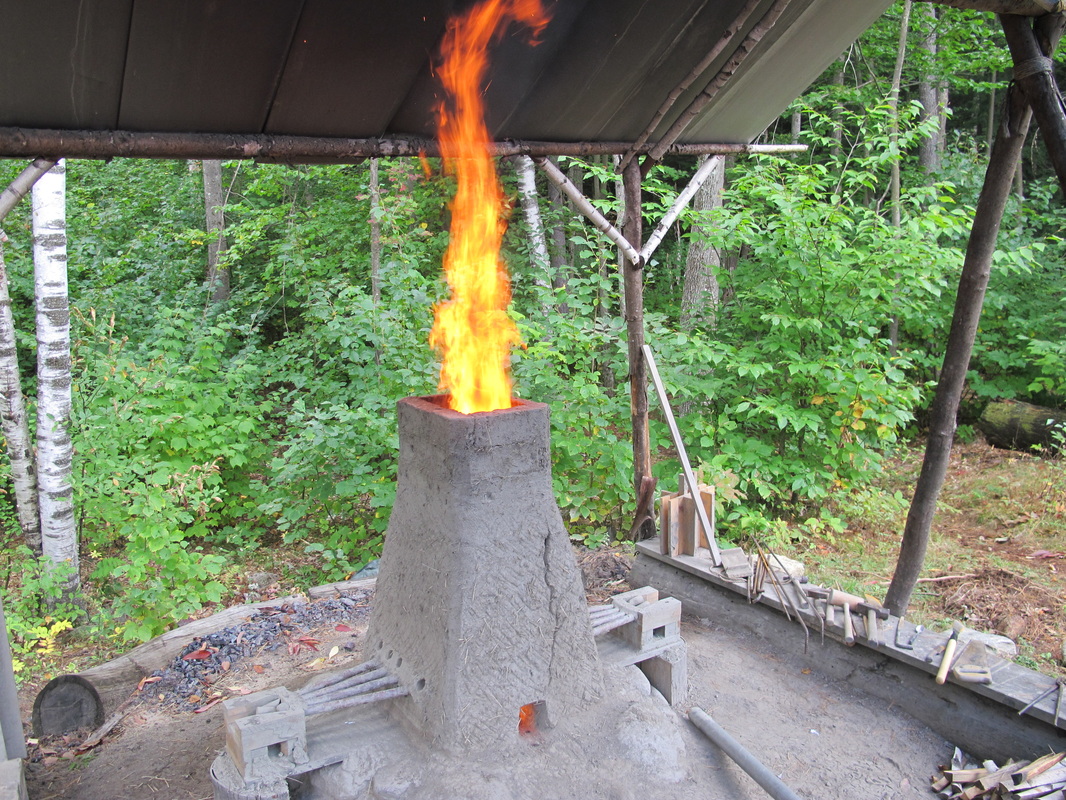
Noro holes and tuyeres are left open, to allow a natural draft to occur, and a small fire is lit. During the course of the day the fire is gradually built up and thoroughly dries the cob.
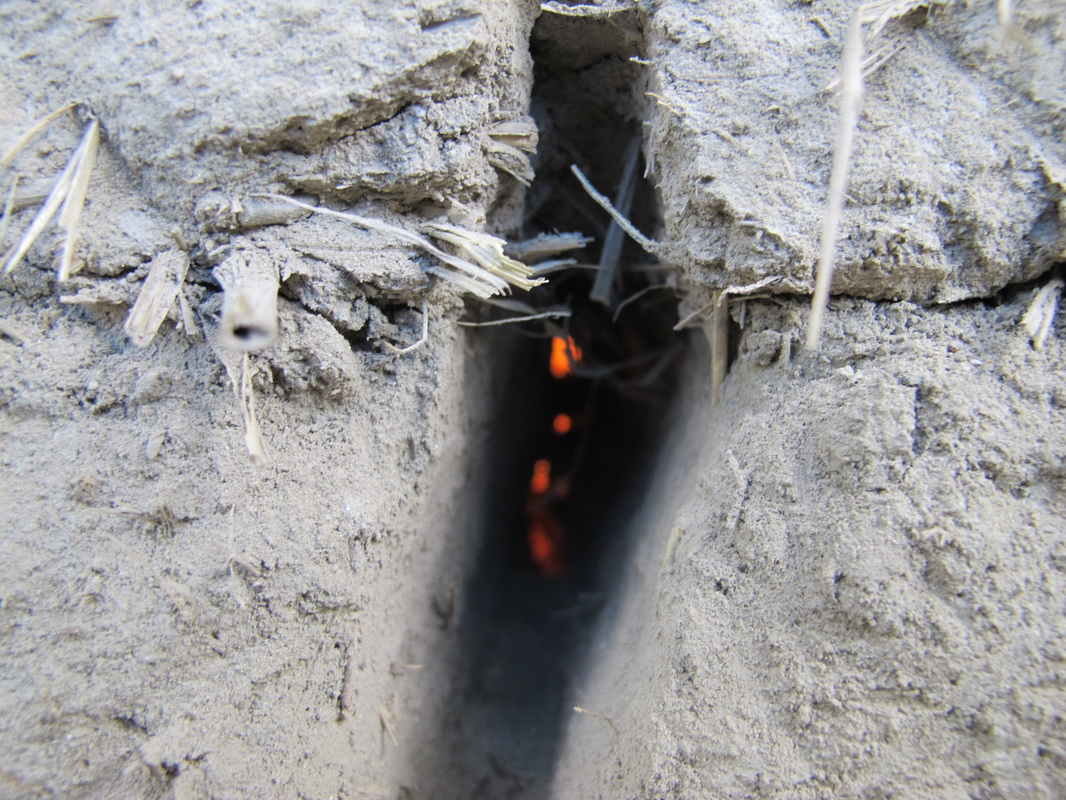
|
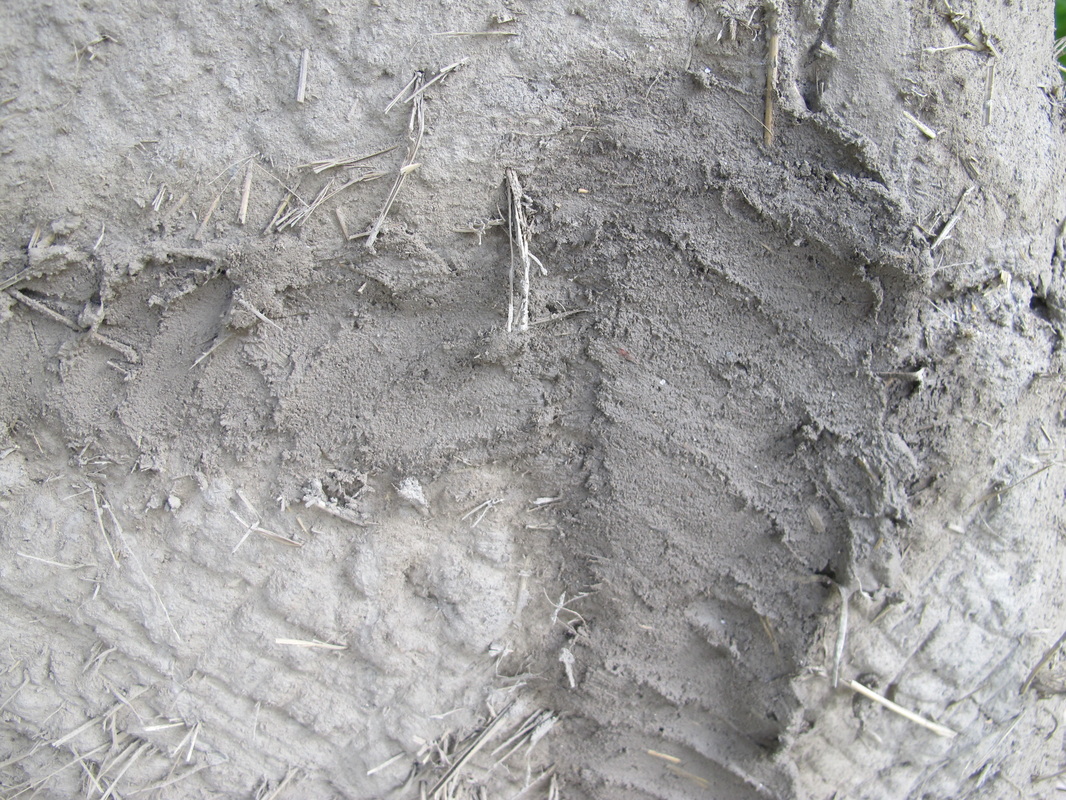
|
In spite of all our efforts, a considerable amount of cracking occurs.
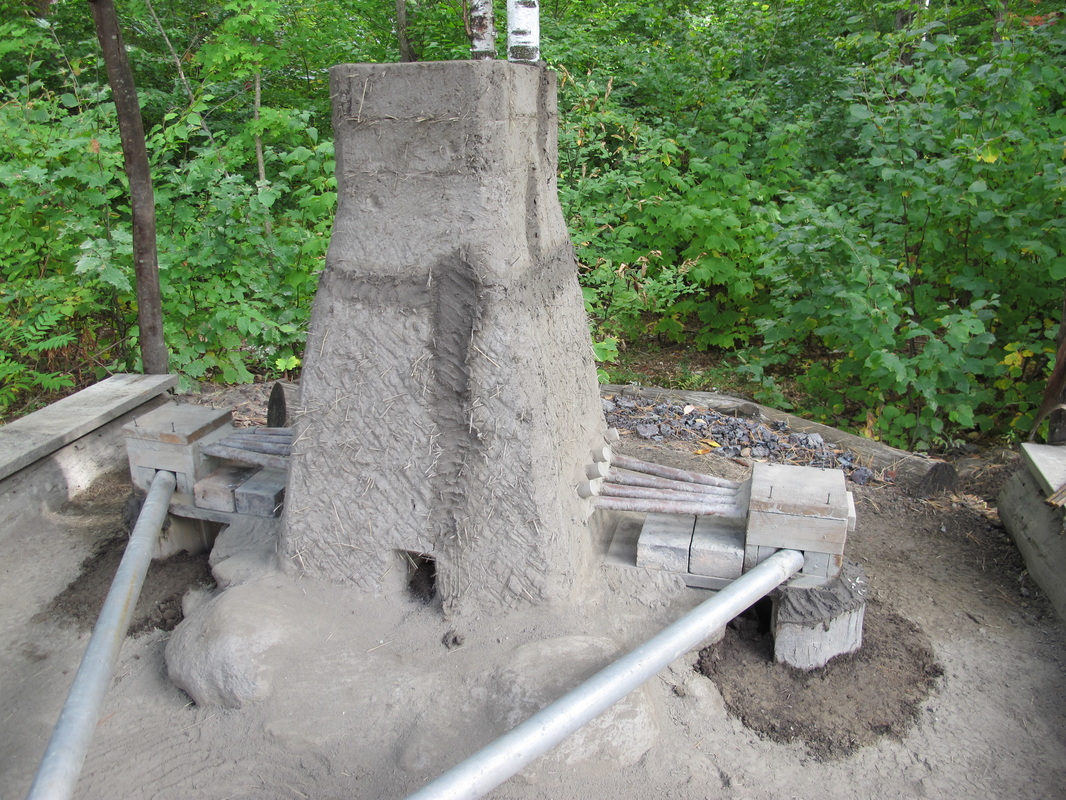
Structurally, the cracks are no more of an issue than the mortar joints, once they are carefully filled.
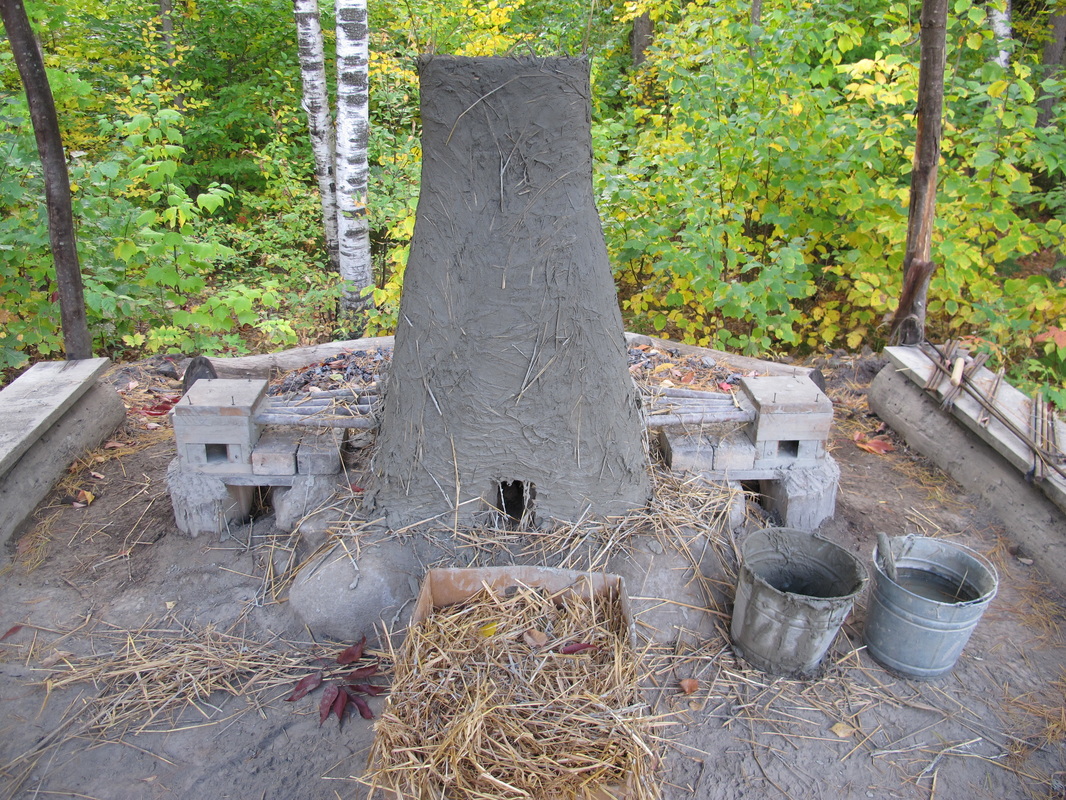
Almost done! In a two-step process, a final layer of even parts sand/clay is plastered over the entire surface. The mixture is smeared on, long straw is stuck onto it, and then more of the mixture is smeared over that.
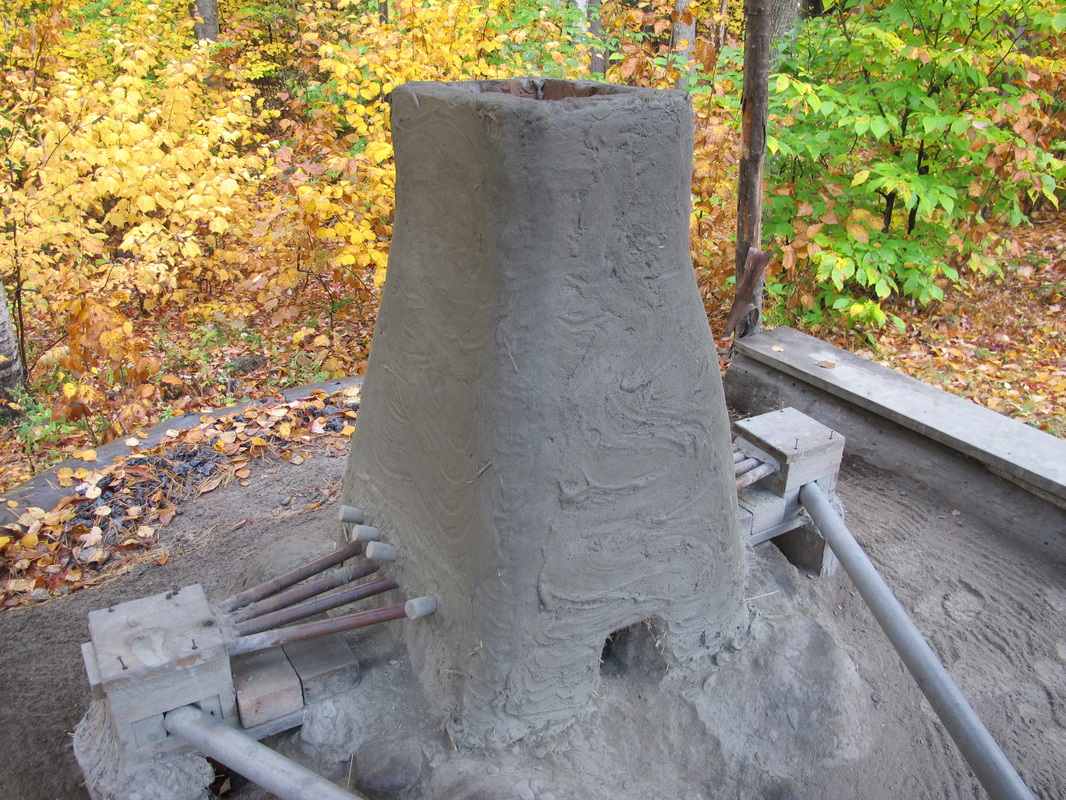
A final coating of sand/clay and the tatara is finished.